Resources

Information on the bioeconomy


We have a range of resources to provide the most up to date information about the bioeconomy.


This includes our own guides to explain the bioeconomy as well as policy documents and reports from the BBIA and third parties that we believe are relevant to the bioeconomy.

Plants in flasks

Explaining the bioeconomy

Focus Area 1

What is the bioeconomy?

Focus Area 2

What are bio-based and biodegradable materials?

Focus Area 3

The truth about bioplastics

Policy and reports

In this section of the website, policy documents issued by BBIA and others can be found alongside the many reports and studies issued by third parties that we believe are relevant to the bioeconomy.
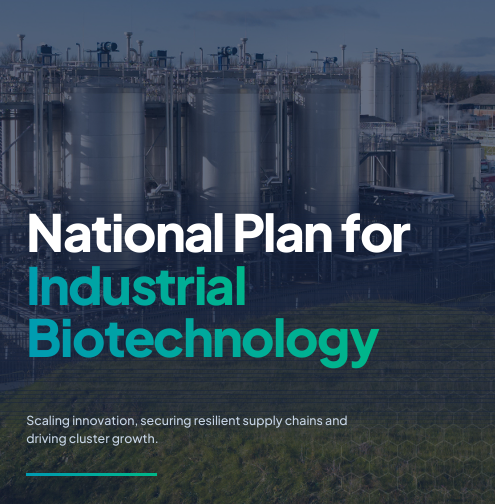
UK Fermentation  & Downstream Processing Capacity: Current Capability, Scale-Up Gaps and Investment Needs for Engineering Biology in Non-Human Health Applications

UK Fermentation & Downstream Processing Capacity: Current Capability, Scale-Up Gaps and Investment Needs for Engineering Biology in Non-Human Health Applications

The UK is at a critical point in developing its engineering biology sector, with advances creating new opportunities across multiple industries. Yet a common claim persists: that limited scale-up infrastructure is the main barrier to market. This report challenges that view. Drawing on industry insights and survey data, it finds that while fermentation and downstream capacity matter, the real barriers to commercialisation are broader—spanning investment, coordination, and the link from research to industry.

Rethinking UK Packaging Policy to Unlock Bio-Based Innovation, National Resilience and Economic Growth

Rethinking UK Packaging Policy to Unlock Bio-Based Innovation, National Resilience and Economic Growth

Modern society depends on packaging to store, protect, and transport goods at scale, supporting essential systems such as food supply, healthcare, and e-commerce, while reducing damage, contamination, and waste. However, most packaging remains fossil-based and short-lived, generating significant waste and emissions; with the UK producing around 12 million tonnes annually and recycling rates still limited, policy misalignment and higher costs for bio-based alternatives risk slowing innovation, investment, and the transition to a more sustainable circular economy.

Bio-Based Solutions: Financing the Future

Bio-Based Solutions: Financing the Future

Over £3 billion has flowed into the UK bio-based sector since 2008 — but scaling the industry remains the next major challenge.

Newsletters

June Newsletter

June Newsletter

BBIA June Newsletter

Our vision

Our vision is for a more sustainable future, where the UK is a global leader in developing, manufacturing, using and exporting bio-based and biodegradable solutions
Abstract nature background